
There is a frightening truth about the structures of our world: if you have the ability to help, but do not give your full attention, a life can slip away.
We often speak of karma as though it is distant, cosmic, and unfolding somewhere beyond us. But in a hospital hallway or a quiet corner of a garden, karma feels immediate. It is the quality of our attention. It is the difference between a doctor who sees a patient as a case and a family who sees that patient as their whole world.
The Myth of Safe Hands
We are taught to trust experts. But too often, we place our lives in hands that are not malicious, only limited.
A doctor may not read the full picture. A specialist may focus so narrowly on the heart that they miss the infection spreading through the blood. Each person may do their part, yet no one may truly hold the whole.
If we remain passive, we silently agree to whatever happens next. But the loss will not belong to the system. The pain will be ours.
When my mother was hospitalized, my sisters and I realized that we could not remain “just family.” We had to become coordinators, observers, advocates. In many ways, we became project managers for her survival.
We stayed alert. We asked why. We asked what next. We asked what if. We did not assume the system would carry the full burden on its own.
The Human Gap in Every System
The reason we must take charge is not because people are bad. It is because they are human.
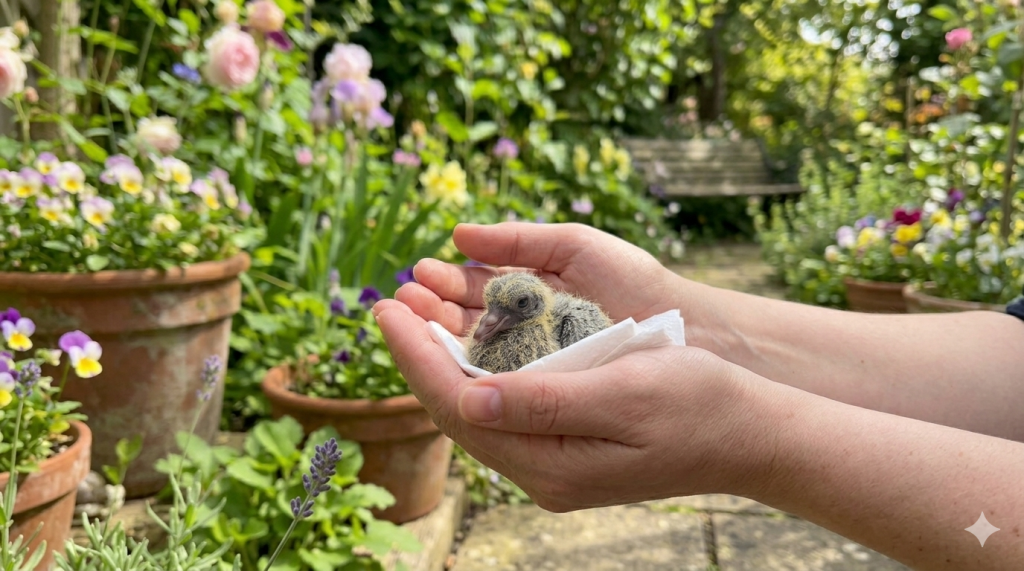
I learned this in a painful way when a bird in my garden did not survive. My goal had seemed simple: provide the minimum it needed. But I was sick, exhausted, and mentally scattered. I missed the signs. I did not fully grasp the shifting weather—the south winds and the heat from the north sun, nor the rain that was coming. I failed to see the true severity of the injury after its fall from a tall tree, or how fast things were changing.
That experience showed me something hard but important: professionals are human in the same way.
They too can be tired. Distracted. Narrowly focused. Burdened by their own struggles. Their awareness is not constant. Their alertness rises and falls. Their judgment, though trained, still moves through the limitations of body, mind, and circumstance.
And when life is fragile, those fluctuations matter.
Becoming Part of the Team
Once you understand this, the goal is not to stand outside and criticize. The goal is to become part of the team caring for the person you love.
That means asking better questions. Not just, “Is she okay?” but, “If the PCT rises further, what is the escalation plan?”
It means creating redundancy. Seeking second opinions. Building backup plans instead of assuming the standard process will catch every danger.
It means staying informed. In situations where timing can determine survival, understanding even a little can make your questions sharper and your actions faster.
It means studying trends, symptoms, reports, and risks closely enough to notice what may be missed when others are overwhelmed or overextended.
In today’s world, knowledge is more accessible than ever. We may not be doctors, but we can learn enough to ask the right questions at the right time.
And sometimes, that alone can change the course of care.
Radical Advocacy
Whether it is a mother in a hospital bed or a wounded bird in a garden, the lesson is the same: awareness is a form of love.
To stay awake, to ask, to notice, to follow through, to refuse blind passivity, this too is love.
People do not always give their best automatically. Sometimes they need reminding. Sometimes they need partnership. Sometimes they need someone nearby who carries the urgency that they themselves, for human reasons, cannot fully feel in that moment.
So we take charge not because we are hungry for control, but because we refuse to let a life be lost simply because no one was there to ask, “Why?”
To advocate with full awareness is not interference. It is love taking responsibility.
Reflection
Where in your life is “awareness” calling you to stop being a spectator and start taking charge?
Awareness is more than a silent state; it is a physical commitment. It is the labor of looking closer—moving a chair, questioning a protocol, or shielding a vulnerable soul from the rain.
When we stop being spectators and start taking charge, our presence becomes the very environment where healing becomes possible. It is the moment where ‘seeing’ becomes ‘saving.’


Leave a comment